Reflective writing is a major component of how I teach a first-semester English Composition course – two other major components are rhetorical analysis and argumentation. Students actually write several reflection assignments in my class, as both major assignments and daily writing and reading activities.
In this blog post, I am going to describe the English Composition essay assignment I call a “Symbolism Essay” where students reflect on a meaningful object. The specific assignment prompt is to “explain how a personal object symbolizes you.” In this essay, students write a traditional five-paragraph essay where they describe the object and then explain the importance of the object.
The main goal of the assignment is to articulate a thesis statement about how the object is significant or what it represents and to create unique paragraphs that explain a single idea. Each paragraph is supposed to start with a claim about the significance/meaning of the object and also provide some discussion to explain the claim. The whole essay is mostly an exercise in organization.
Theoretical Background
This essay assignment has two major theoretical foundations. One of them is T.S. Eliot’s concept of the “objective correlative.” A short definition of the “objective correlative” is that it is an object (in a literary work) that elicits a specific emotion in the reader. More specifically, the object (the objective correlative) can represent or suggest a character’s emotion.
For example, in the American drama “The Glass Menagerie,” by Tennessee Williams, Laura’s collection of glass animals symbolizes her fragility and her fragile emotional state. When she feels hopeful and positive, she spends time polishing the glass items. But when one of the glass figures breaks, we feel that her hope and her spirit have broken as well. So, in this play, there is a strong connection between the glass figures and Laura, and Laura herself can be seen as a fragile glass figurine.

The “objective correlative” is a very important concept in Modernist writing. This concept is related to the Modernist idea of “showing rather than telling” and of the Modernist writer’s use of imagery to convey emotions. The Modernist writer often sets the mood by describing an object or a natural landscape.
Another major theoretical foundation is the idea of “storied matter” in the field of Material Ecocriticism, which has been popularized by Serenella Iovino and Serpil Oppermann. The basic idea is that all living and non-living matter (trees, rocks, landscapes, etc.) have a story to tell. This idea goes beyond the traditional notion that observers of nature can imagine a story that involves the things they see. Instead, it is more like “the hills are alive with the sound of music,” where non-human items have the “agency” to tell a story. Practitioners in this field insist that non-human objects are capable of telling their own stories. Some examples are that tree rings can tell stories about drought and forest fires, DNA can tell the story of evolution and inheritance, and landscapes can tell the stories of glaciers and volcanic explosions.
Approaches and Examples
This assignment is usually a simple five-paragraph essay. In the introduction, students usually describe the object physically, or they present some background about the object, or they tell a story about how they found or bought or inherited the item, or they write generally about what the item symbolizes in every-day life. At the end of the introduction paragraph, students present a thesis statement that explains the overall idea of what the object symbolizes or what it means to them. Ideally, the thesis statement would present a “dominant impression” about the object, such as “family” or “personal responsibility” or “childhood.” However, the thesis also often becomes a list of attributes that outline the subsequent paragraphs.
If the student does not fully describe the object in the introduction, they do so in the first body paragraph. This paragraph presents a physical description of the tangible characteristics, such as size, weight, color, and material. Additionally, the student may provide a more detailed story about how they bought or received this item.
In subsequent paragraphs, students explain what the object symbolizes or what it means to them. Here are several approaches they commonly take.
Describe what the object “means” to them emotionally. Student often write about the sentimental value of an item they have. This may be something from their childhood, a special gift, an inherited item, or something of cultural value. Examples include their mother’s wedding dress, their grandmother’s jewelry, their grandfather’s military uniform, a special birthday gift, an academic or athletic award, or an item of cultural value. In these examples, students write about the importance of family, the sentimental connection to their family member, how hard they worked to achieve the award, or what the cultural item means to them. This paragraph is often personal, and it displays an emotional connection to the item.

Another frequent approach is to connect a specific characteristic of the object to a personal attribute of the student. In this case, students treat the object as a metaphor for how they live their life. For example, their clean car may represent their tidiness, and their well-organized contact list on their phone (with correct name spellings, use of capital letters, complete contact card with address and email) may represent their attention to detail. Unfortunately, students who use only this approach often struggle to identify an overall dominant impression (thesis) of what the object represents. Instead, they only make small, individual connections between a characteristic of the item and a personal attribute. As a result, their essay isn’t thematically cohesive or connected. Nevertheless, students who identify multiple characteristics do a good job of writing unique paragraphs that also display effective paragraph structure and overall essay organization.
Another frequent approach is to connect the personal object to a broader cultural attribute. For example, a childhood toy may represent “childhood” and “innocence,” a pickup truck may represent “manhood,” and a drawing notebook may represent “creativity.” In these examples, students connect the object to a broader cultural concept (such as childhood, innocence, or manhood). Effective essays also include a personal component, where the student explains in more detail how that specific object represents their own attribute: not only childhood in general but their childhood, not only manhood in general but their manhood.
For example, kids toys obviously represent childhood, but the effective essay will explain (for example) that the “Toy Story” movie Woody doll represents the student’s childhood because they first watched “Toy Story” when they were five years old, and they connected with Andy as they too were going to Kindergarten. Later on, they struggled with the decision to keep or throw away the Woody toy because it reminded them of the struggle in Kindergarten.
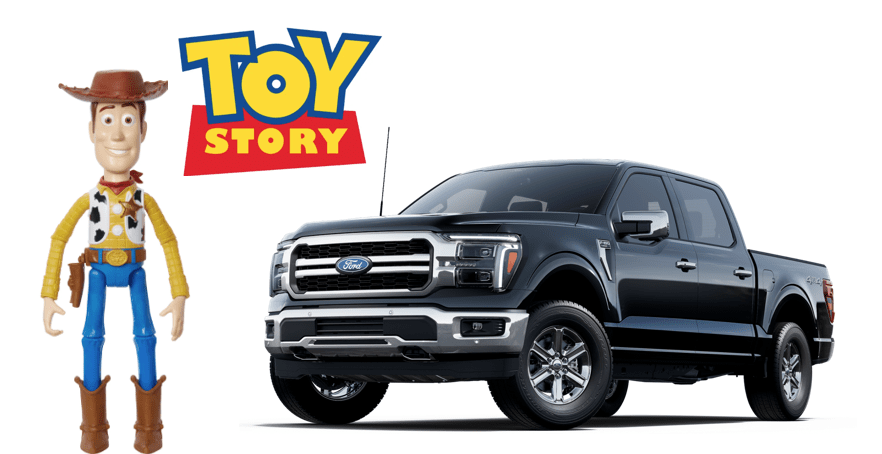
Similarly, another student wrote that his Ford F-150 represents his manhood because he uses the truck for construction jobs and also for projects at the house he recently bought with his fiancé. When he got the job and bought the house, he realized that he could no longer drive the small, sporty coupe he had in high school. Instead, his new status as a construction worker and a home-owner made him feel that he needed a bigger and more powerful work truck. All these things demonstrate to him, his fiancé, and his family that he has grown up and become responsible – in his words, he feels that he has “become a man” – and his truck was part of this growing up and maturation process.
Reading Assignments
Students are guided in this essay assignment by examples of professional stories that address the same idea.
One of these is Tim O’Brien’s famous short story about the Vietnam War called “The Things They Carried.” This short story describes the personal items Jimmy Cross and other soldiers carry during their deployment. Jimmy carries letters and a good luck charm from a girl named Martha; she is not his girlfriend, but the letters allow him to believe that he is in a relationship. Other soldiers carry family pictures, a pocket Bible, a slingshot, M&M candy, and they all carry military gear and tools, including weapons, clothing, food, and emergency supplies. Throughout the story, we also learn that soldiers carry heavy emotions. At one point, soldiers get caught in an ambush, and Jimmy blames himself for becoming distracted by fantasies of Martha instead of paying attention to his surroundings. Because of this, Jimmy also carries a lot of guilt. The other soldiers also carry fear, superstitious beliefs, and more. Overall, this story does a great job of describing the emotional value of items and also of portraying emotion as things to be carried.
Another reading assignment I use is Marilyn Schiel’s creative autobiographical story “Levi’s.” This story is about young girl’s first pair of blue jeans, an oversized hand-me-down from her brother. In the story, Schiel describes her transition from pretty, young-girl dresses to teenage blue jeans, and she situates the story within the cultural context of the mid-1900’s feminist movement. Throughout the story, Schiel argues that her parents encouraged her to explore behaviors beyond the stereotypical feminine gender; these include wearing blue jeans, riding a bike, and playing with BB guns. In this story, Schiel connects the blue jeans with her tom-boy spirit, her parents’ belief in gender equality/fluidity, and the broader counter-cultural movement of the 1950s and 1960s.
Both of these articles give students examples of how personal items can have complex emotional and cultural meanings.
Grading Rubric
I use a somewhat formal grading rubric to evaluate the symbolism essay. Components of the rubric include the following criteria:
- Explicit thesis statement that provides a dominant idea of what the object symbolizes, not only a list.
- Physical description and some narrative or background about the object – either in the introduction or in the first body paragraph.
- At least two body paragraphs that provide a detailed discussion of what the object symbolizes.
- Essay is organized into separate paragraphs, and each paragraph contains a unique idea.
- Each paragraph begins with a transition phrase and a topic statement; the topic statement explains what the object symbolizes.
- The analysis and explanation is personalized to the student and sophisticated, not generalized or stereotypical or cliché statements about the object.
- The sentence-level writing is accurate and effective, includes a variety of sentence styles, and is free of grammatical errors.
Conclusion
In a first-semester English Composition course, the symbolism essay assignment helps students develop analytical thinking and writing skills. Students identify the symbolic and metaphorical meanings of a personal item that has a lot of meaning for them, and they explain their ideas in straight-forward expository writing that asks them to create a central thesis statement and several cohesive paragraphs. Additionally, this activity helps students situate their identity in a broader context of cultural symbols and attributes, so the assignment also includes a literary and cultural component as well.
Lirim Neziroski, Ph.D., MBA, MSIS is a higher education administrator, an education consultant, a writer, and a previous faculty member with expertise in higher education leadership, instructional technology, curriculum development, academic assessment, and leadership of academic and online programs. Contact Lirim for individual mentoring and assistance with writing and editing.
 Lirim Neziroski
Leave a comment