2024 was a great year for me because of the many state-wide educational projects I was involved with. These included Early Childhood Education, College & Career Pathways, Developmental Education Reform, Dual Credit, the Illinois Success Network, Transitional English, Academic Assessment, and the Council of Community College Administrators. Here is a summary.
Early Childhood Education
In Spring 2022, all Illinois community colleges (including my school) were given hundreds of thousands of dollars over three years as part of a national plan to expand Early Childhood Education and Child Care Services. The grant funding helped colleges recruit more students (especially working adults), hire support staff, provide support services to students, improve curriculum, and even build facilities and remodel classrooms. My college did all of these things, and we did much of them in 2022 and 2023.
In 2024, the federal grant ended, but the state of Illinois continued its focus on Early Childhood Education and Child Care Services by creating the new Department of Childhood Education. Illinois also continued scholarship funding for about 650 students with $5 million, which was way less than what the federal funding provided.
I was involved in two ways. First, as the supervisor for Early Childhood Education programs at my college, I helped the academic department transition from the federal grant. In this process, we had to figure out how to continue our recruiting and student support efforts without the grant funding. We distributed responsibilities from a grant-funded staff member to other areas of the college; for example, the college created a new student services department that focuses on student retention and support. We also created a new full-time, tenure-track faculty position in Early Childhood Education, which was an amazing accomplishment for the department.

Second, I became more actively involved in the state-wide Early Childhood Consortium, which is a group of college educators and representatives from state educational organizations (ICCB and IBHE). (Here is the state legislation for the Early Childhood Consortium.) In this group, we provided input on the state’s new Department of Early Childhood. We also participated in brainstorming, professional development webinars, and other support sessions for many aspects of Early Childhood.
College & Career Pathway in Education
In 2016, the state of Illinois passed legislation for the Postsecondary and Workforce Readiness Act (the PWR). This important legislation called for competency-based education, Transitional Math and English, and the creation of College & Career Pathway Endorsements (CCPE).
Through these endorsements, high school students declare a career interest in one of seven career clusters or areas (See the “Career Clusters” tab on ISBE’s Pathway Endorsements webpage), and they start to take career-oriented classes (including Dual Credit classes) in high school. By graduation, students can get an “endorsement” (basically a seal on their diploma or a notation on their high school transcript), and high schools and colleges are supposed to create a seamless hand-off that enables students to easily pursue their career-focused degree.
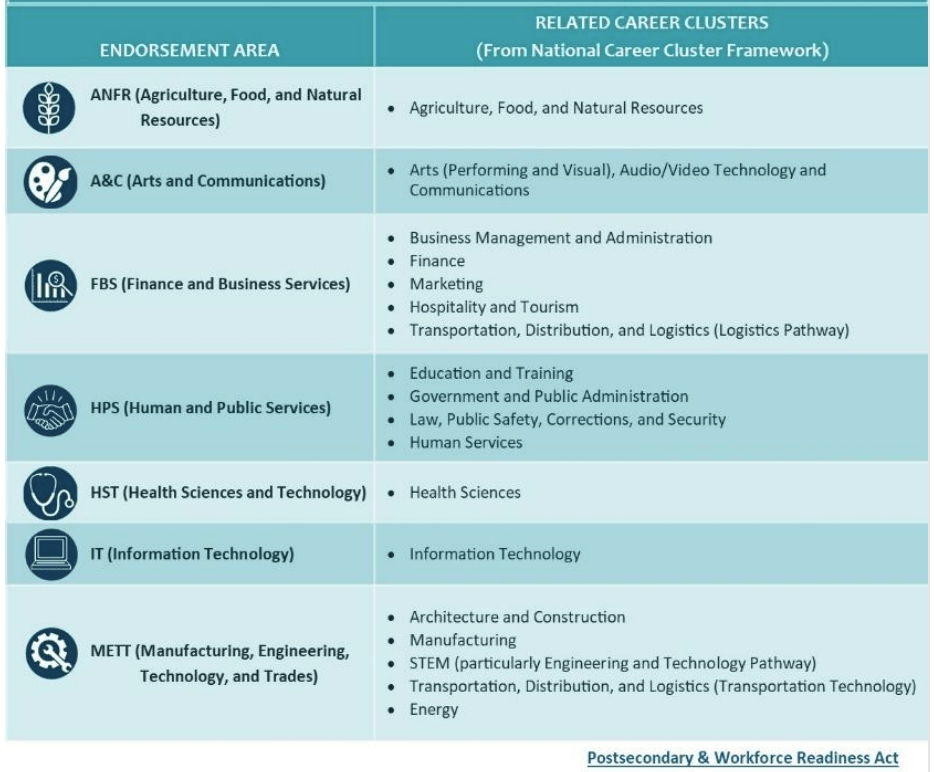
One of the career clusters is in Education, for students who are interested in becoming teachers. As the supervisor for Education programs at my college (including Elementary Education and Early Childhood Education), I helped create two Pathway Endorsements in Education in partnership with several high schools, the Area Career Center, and the Regional Office of Education.
As part of this work, we identified Dual Credit and Education courses for the Pathway, and we also identified methods of data tracking and related student activities. This project began in 2023 with the help of a planning grant, but everything became finalized in 2024, and now students at several high schools have a seamless education pathway at my college for a career in teaching.
Developmental Education Reform
In March 2021, the Illinois state legislature passed the Developmental Education Reform Act (DERA) – see my previous blog post about DERA here. DERA requires colleges to use “multiple measures” in assessing students for placement in English and Math courses, and it sets limitations on Developmental Education courses. Basically, students should be able to complete a credit-bearing English or Math course within the first year of college.
In practice, the DERA legislation means that colleges should offer co-requisite support courses for English and Math, rather than traditional stand-alone Developmental Math, Writing, or Reading courses. My college (like many others across Illinois) still offers traditional Developmental Education courses. As the supervisor for the English department, I have been helping to lead the Dev Ed reform efforts at my college.
Throughout 2024, my college participated in a peer-mentoring program through the Partnership for College Completion to help us revise our Developmental Education program and become aligned to DERA requirements. As part of this work, a group of college faculty, staff, and administrators met with an assigned peer mentor every two weeks, the college team had follow-up meetings internally without the mentor, plus smaller groups met separately with other mentors to evaluate our student enrollment and student success data and to explore options for curricular revision.
Our group also attended the IDEEA Summit, a one-day conference about Dev Ed reform, hosted by PCC in Fall 2024. Before that, I attended the National Conference on Acceleration in Developmental Education (CADE) in Milwaukee in June 2024. I was also the lead writer for the ICCB report about Dev Ed Reform efforts at our college.

The DERA work is ongoing at my college and will continue through Spring 2025, but I think our team made a lot of progress intellectually about the new goal of Developmental Education and the spirit of the DERA legislation (which promotes student success in college courses, not remediation of reading, writing, and math skills students are lacking).
The DERA project is probably the most difficult and the most influential project I have worked on in several years. It’s a big project that is emotionally challenging and will have a large impact on students and teachers across the college and the regional district. I look forward to continuing this work in 2025.
Dual Credit
As an academic dean, I was previously involved with Dual Credit indirectly because most Dual Credit courses at my college were in academic disciplines that I supervised, especially in English, Speech, History, and Psychology. As the dean, I helped schedule and staff Dual Credit courses, and I provided guidance to Dual Credit high school teachers in these academic disciplines.
In Spring 2024, supervisory responsibility for the Dual Credit Office transitioned to me, and I became the co-chair of the Dual Credit Committee. As the new supervisor, I hired a new Dual Credit Coordinator and a new Dual Credit Support Specialist, and we established a new office on campus. This required establishing a new physical space for the office, a separate budget, many new processes, and formal goals and metrics to track and evaluate our performance. We also created the college’s first Dual Credit Community Advisory Committee, we offered a full-day Dual Credit Instructor Orientation in the summer, and we helped improve many onboarding processes for students and teachers.
My work with the Dual Credit Office has helped me appreciate how much they do. The Dual Credit Office is truly a microcosm of the whole college. Everything that happens at the college – course scheduling, faculty mentoring and support, student academic support, technology troubleshooting, advising for courses, enrollment and registration, billing, marketing and recruiting – also happens at a smaller level at the Dual Credit Office.
Through Dual Credit, I have also become very connected with our partner high schools and with statewide organizations for Early College such as ILACEP.
Illinois Success Network
The Illinois Education and Career Success Network started as a collaborative project to increase post high school degree attainment to 60% by 2025. (Any “meaningful” credential counts – including an Associates, Bachelors, or Masters degree or a professional license such as welding, HVAC, massage therapy, dental assisting, cyber security, computer networking, and more.) As a state, Illinois is very close to the goal of 60%, and it will probably achieve the goal very soon.
However, there are several communities within Illinois that have a much, much lower percentage of degree attainment, and the goal now is to help all communities get to 60%. In order to accomplish this goal, the state-wide Success Network has established “regional” Success Networks it calls “Leadership Communities.” Each of the regional communities is made up of regional leaders in education, professional training, and the workforce, and they all work together to increase the level of degree attainment in their community.

Each regional community has a lead institution, and my college is the lead institution for our community. I participated as a member of my region’s leadership community last year, and I became the chairperson / coordinator of the regional leadership community in 2024. When our group attended the yearly meeting, many of our goals focused on Dual Credit, Developmental Education, and CCPE Endorsements, which are projects I was involved in, so the group recommended that I serve as the coordinator for our leadership community.
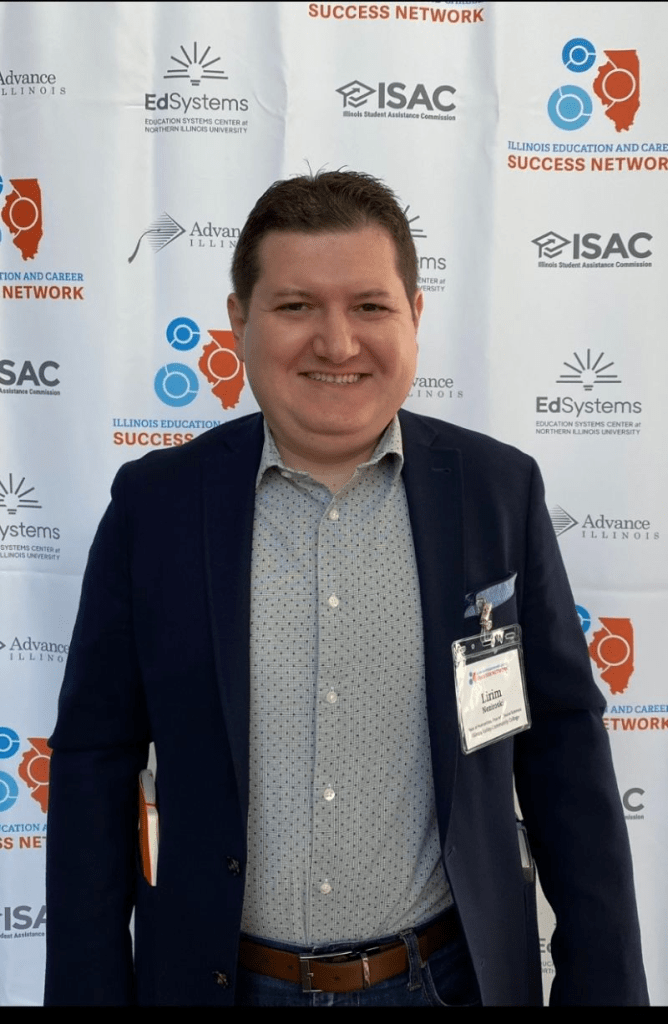
I hope to be more involved with this group in 2025 because honestly I didn’t involve the broader community as much as I should have, though I did focus on Dual Credit, Developmental Education, and CCPE Endorsements at the college. My role is to promote communication and information sharing among the group and to invite participants to the annual meeting. At the next annual state-wide meeting, I have been invited to participate on a panel discussion.
Transitional English
Transitional English is a senior-level high school course that prepares students for First-Year English Composition. The course was established in the Postsecondary and Workforce Readiness Act of 2016, and specific course guidelines were collaboratively developed around 2020 or 2021. Students who complete the Transitional English course in high school with a C grade or better can register for an English Composition course without the need for placement testing.
Unfortunately, the state-wide group that collaboratively developed the course requirements and guidelines did not develop a course template. As a result, each high school has had to develop its own course, often in collaboration with other high schools, a local college, and the the Regional Office of Education. The Educational Systems Center at Northern Illinois University has also taken a leading role in providing resources and support for the development of a Transitional English course.
Some schools were early creators of the course, and some colleges created a standardized version of the course for all high schools in their district to adopt. As the supervisor for the English department, I have been very involved in the development of a Transitional English course at my college. But we have also struggled to develop a course that met all the guidelines. Our first course, with a partner high school, took 18 months to develop, and it finally got approved in Fall 2024.
Several more high schools are interested in a Transitional English course as well, and I have an opportunity to help them develop the course. Honestly, I have a leadership opportunity (that I did not embrace in 2023 or 2024) to lead a district-wide team to develop a standardized course that can meet the needs of all high schools in our area. I probably should have done this last year, but I hesitated to do so because I did not have a strong understanding of the course requirements, I thought the Dev Ed reforms would eliminate the need for a Transitional English course, and I also believed that each school should have a unique version of the course that fits their interests and ability to support students. I hope to be more involved with Transitional English in 2025.
Academic Assessment
I have been an assessment leader at my various colleges (and I would say regionally in the Midwest) since 2017. At that time, I attended the IUPUI Assessment Institute in Indianapolis, which is a major national assessment conference, and I completed training for the Carnegie Designation in Community Engagement. I have attended the Assessment Institute every year since 2017, and I have presented at the conference three times.
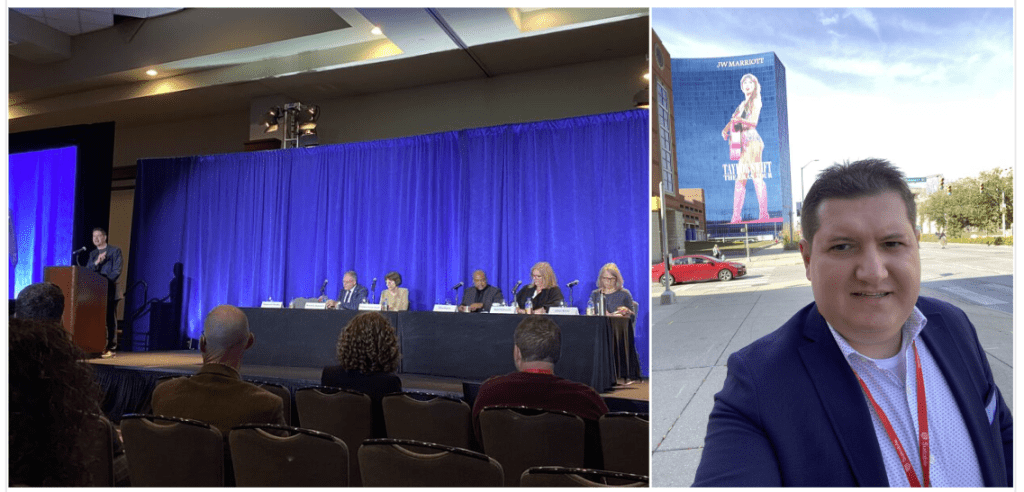
At previous colleges, I was the manager of the Learning Management System; I produced data reports and I helped interpret the reports for assessment and accreditation purposes. I also managed online testing platforms, and I helped academic programs align exam questions to course outcomes and accreditation standards. In 2017 and 2018, I attended national conferences in Denver and Ft. Lauderdale to learn about question “tagging.”
At a four-year university, my role as the Dean of Teaching & Learning was responsible for managing the annual academic assessment process, the program review process for non-accredited programs, and assessment of General Education Learning Outcomes. I was also the team leader for one of the HLC Accreditation criterions, and I was the administrative co-chair of the University’s Assessment Committee. In this role, I also completed training in assessment and quality assurance through the AACU Value Rubrics training, the HLC Assessment Leaders workshop, and Quality Matters courses.
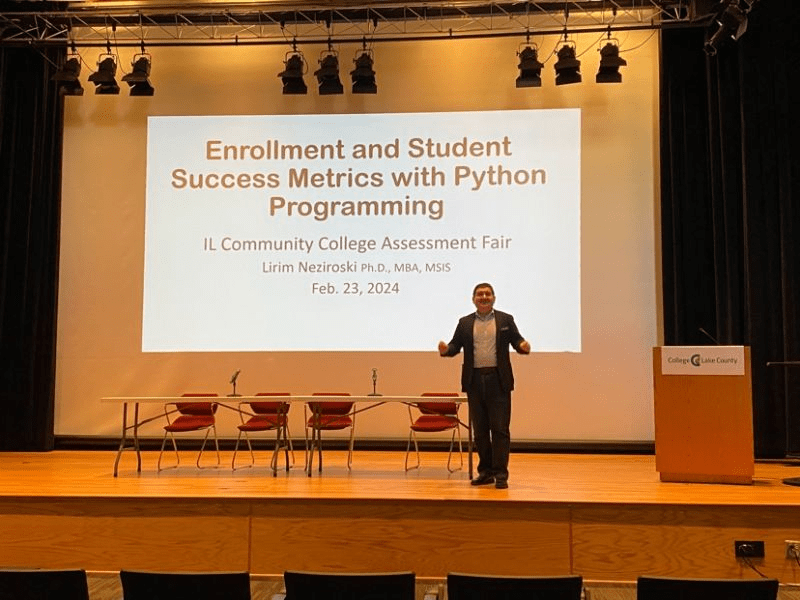
In 2023, I participated in the Grand Challenges in Assessment, which is a national collaboration of assessment practitioners to promote scholarship and resources in assessment, and I have attended and presented at the Illinois Community College Assessment Fair. In Spring 2024, I gave a presentation at the Assessment Fair about my Master’s Practicum project that analyzed student enrollment and success data using Python programming.
Currently, at my college, I serve on the Assessment Committee, and I help faculty and Dual Credit high school teachers complete their assessment of student learning outcomes in their courses. As an assessment leader on the committee, I host assessment workshops at in-service and professional development days on campus, and I have been developing assessment processes to measure co-curricular learning outcomes in the performing arts.
Council of Community College Administrators
The Council of Community College Administrators (ICCCA) is a state-wide collaborative organization of educational administrators. The organization has an executive leadership group, and it also serves as the parent organization for about 20 sub-groups within the organization, which it calls “commissions” – see all commissions here.
I first became involved with the ICCCA as the Manager of Online Learning at a Chicago area community college, where I supervised online academic programs and I served as the manager of the Learning Management System. I participated as a member of the ILCCO group which focused on online education and technology for online learning. In 2022, I also participated in the “Aspiring Leaders” program for future leaders in education.
In Fall 2023, I was asked to revive the dormant commission of the Arts & Science Deans – called ASTDEA or “Transfer Deans” – and I organized the first meeting at the ICCCA annual conference in Nov. 2023. Throughout 2024, I served as the chair / coordinator of the Transfer Deans group. I organized monthly professional development presentations or group discussions via Zoom, shared information and resources, and organized a panel discussion at the 2024 ICCCA Conference.
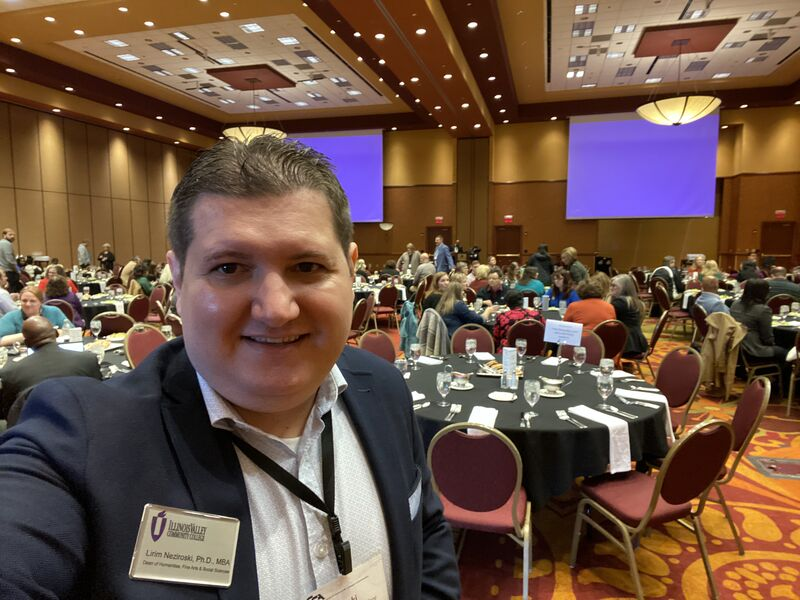
As the chair of the Transfer Deans commission, I also serve on the Executive Committee for the ICCCA. In 2024, I helped plan the annual ICCCA Conference, I helped revise the ICCCA Constitution, and I participated in a panel discussion about the commissions for the Aspiring Leaders group. The Transfer Deans group has been one of my most rewarding activities in 2024, and I look forward to continuing with the group in 2025.
Lirim Neziroski, Ph.D., MBA, MSIS is a higher education administrator, an education consultant, a writer, and a previous faculty member with expertise in higher education leadership, instructional technology, curriculum development, academic assessment, and leadership of academic and online programs. Contact Lirim for individual mentoring, assistance with writing and editing, and public speaking services.
 Lirim Neziroski
Leave a comment