I am writing a series of blog posts about the effects of Covid-19 on higher education. In this post, I explore the effects of Covid-19 on experiential learning. Experiential learning is experience-based learning where students engage in active, hands-on learning. Examples include science labs, clinical skills labs and simulation centers, clinical courses, internships, service-learning, student teaching courses, art studios, music recitals and practice sessions, study abroad and foreign term, and much more. During the pandemic, many academic programs transitioned to an online or virtual format, and students lost the ability to learn through first-hand experience.
This blog post is based on my presentation at the FSI: At the Intersection of Teaching, Learning, and Technology conference at the University of Illinois. Conference information, this year’s program, and a link to my recorded session can be found on the FSI Conference website.
Why Experiential Learning?
First-hand experience is a powerful learning tool. Students remember the things they do with their classmates, and these activities make an impression on them emotionally and intellectually.
However, not every student can participate in engaging experiences. They may be in low-engagement online classes, not have time for out-of-class activities, can’t travel to a clinical site or a foreign country, and many other reasons. Many institutions are not able to create meaningful experiences either. They may lack physical facilities such as science labs and art studios, qualified staff and faculty to coordinate activities, funding, or even the interest to give up lectures for activities.
But some schools do have an outstanding ability to create high-impact, in-person experiential learning activities. They specialize in learning through discussion, hands-on activities, group projects, community-based service-learning, internships, clinical experiences, study abroad, and many more unique learning experiences. Schools that use this ability intentionally also advertise these opportunities to students, and they recruit students who are also interested in this kind of learning experience.
Covid-19 Disruption
When institutions transitioned to remote, virtual, or online learning in March 2020, many schools lost the ability to continue with their existing experiential learning activities. They had to find online alternatives quickly, and they had to shift or reinvent their core identity as an experiential learning institution.
Academic programs that already had online course sections were able to transition quickly by adopting the learning activities and assessments of their colleagues. But many other programs had to invent innovative ways to teach online and conduct student assessments in online and virtual formats. Science labs, Nursing and Allied Health clinical skills labs, Speech courses, and fine arts programs had some of the biggest challenges.
This concern was felt most prominently in Spring 2020, but it is not over. Many schools are planning to continue in a largely remote, virtual, hybrid, or online format, so these alternative experiential learning components are going to be necessary for a few more semesters.
Science Labs
Science lab courses experienced an immediate challenge in the move to online. Many schools take pride in their state-of-the-art science labs, and it is in the lab where the most important learning happens for many science courses. Yet, all of a sudden, students were not allowed to use the lab.
Science courses depend on labs to meet the following learning goals:
- Demonstrate the ability to design an experiment that can answer a research question.
- Make observations and collect data.
- Analyze the data.
- Draw conclusions.
Science programs tried to adjust to the new online environment in several ways. Programs that had online versions of lab courses adopted the activities of these online sections. For example, some online courses required at-home lab kits, so the in-person courses also purchased and distributed lab kits for students.
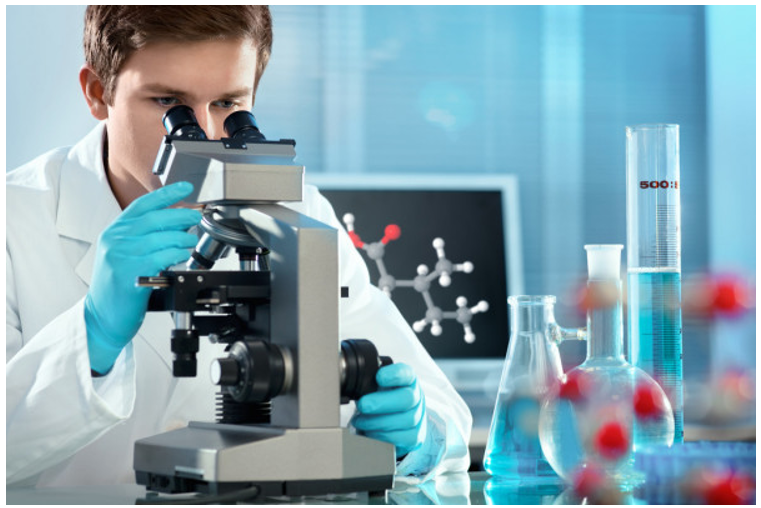
Lab courses also tried to find ways for students to complete labs at home using common household supplies, such as water, measuring cups, rulers, rubber bands, and a bathroom scale. But some labs require the use of dangerous chemicals or expensive and specialized lab equipment students don’t have at home. For these labs, instructors at some schools offered to perform the student’s lab experiment. Students described the lab experiment in writing, instructors set it up according to the student’s description, they carried out the experiment, recorded the data, and reported the results back to students. Then, students analyzed the data, formed conclusions, and wrote the rest of the lab report.
However, when the whole college shifted to remote work, and instructors were no longer able to perform the experiment in the school lab, they emailed hypothetical lab data to students, and students wrote the lab report without actually performing the experiment. This approach allowed students to complete their assignments, but the learning experience was transformed from a hands-on, experiential activity to a writing assignment.
Nursing Clinical, Simulation, and Skills Labs
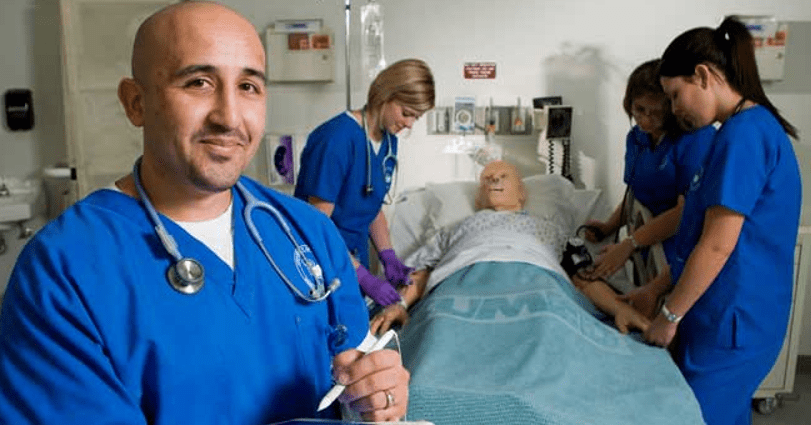
Simulation and clinical skills labs for Nursing and Allied Health courses also had a challenge in moving to the online environment. Unlike science labs, where the assignment that’s graded is a written document, the component that gets graded in a simulation or clinical lab is an action a student performs in person.
Specific learning goals for clinical skills in Nursing and many other health professions include:
- Practice through role playing and through the use of equipment. Simulation labs are made to look like real hospital rooms – complete with uniforms, equipment, beds, and a $30,000 simulated patient. Students in this environment are transformed physically and also emotionally into future healthcare workers, and the simulation lab is one of the most impactful learning environments.
- Learn through guided demonstration, repetition, and feedback. Often, the clinical instructor demonstrates a skill, then the student practices it over and over. With each attempt, the clinical instructor provides feedback, and the student adjusts his or her technique and understanding. This guided feedback loop is critically important.
- Learn through reflection. After each clinical activity, students often meet for a debriefing conversation, and they also write a journal or response essay. In these reflection activities, they identify their strengths and weaknesses, and they create new learning goals for the future.
Portions of this clinical work use writing assignments, but the whole clinical experience cannot be transformed into a written document. Instead, instructors needed to find remote or virtual ways to demonstrate clinical skills, observe their students, and provide feedback.
At first, academic programs tried to use the clinical skills lab in limited ways – with only with a few students at a time, with social distancing, with masks, cleaning between each use, and many other precautions. But even with these adjustments, it was difficult to provide enough lab time for everyone; this approach also increased the lab time for instructors and lab monitors, and it contributed to employee burn out.
Another approach was to perform some of these activities at home. For example, instead of demonstrating hand-washing technique or a blood pressure check on classmates in a clinical lab, students performed these activities at home with a family member via video conferencing or a recorded video students uploaded to the LMS. This allowed instructors to observe their students and provide feedback, but the feedback loop was greatly delayed, and its impact was less effective. However, more invasive clinical skills could not be demonstrated at home.
Video-Based Case Studies
The solution for many academic and healthcare programs was to turn to online video databases. These videos allowed students to learn about the clinical setting, equipment, and procedures from home, and many programs asked to students to write assignments based on the video rather than their own experiential activity.
In science lab courses, some schools turned to online video and simulation lab providers such as Labster. Examples of Labster products include lab manuals for virtual labs, 3D animated videos, and virtual lab simulations (Labster blog). According to Labster’s blog, large university systems such as the University of North Dakota partnered with Labster during the pandemic to provide students with simulated lab experiences in biology, chemistry, physics, and general science courses.
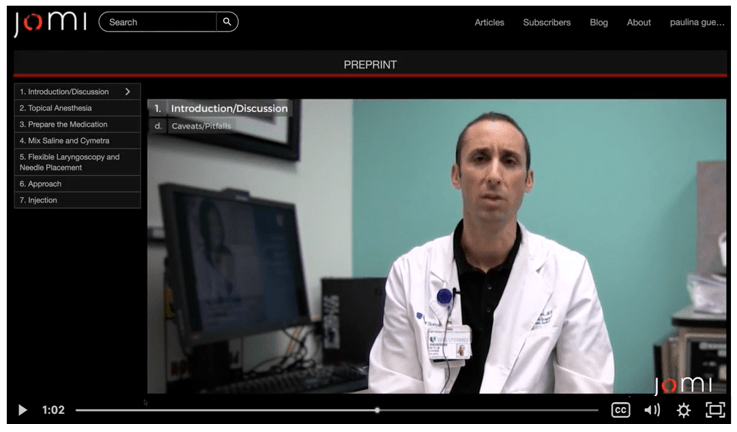
In a Surgical Technology Program I talked with, students watched recorded surgeries in an online database called JOMI (the Journal of Medical Insights). The program requires that upper-level students participate in live surgeries, where they demonstrate surgical techniques, knowledge of anatomy, and proper handling and use of surgical instruments. After a day of surgery, students write an analysis of a specific procedure, and they also reflect on their own experience.
During the pandemic, JOMI provided a library of videos students could watch and use to complete their assignments. Each video in the JOMI database documents a surgery. A surgeon describes the patient’s diagnosis, the goals of the surgery, the tools, and the surgical process. Then, during the surgery itself, the surgeon provides voice-over commentary. These videos helped students learn the anatomy of the body, the surgical procedure, and the surgical instruments, and students were able to complete their written reflection assignments using the surgeries in the videos as the “experiential activity.”
When online video databases were not available, some instructors recorded their own video demonstrations. A Nursing instructor I spoke with used a simple digital camera to record her lecture demonstrations; she uploaded these videos to YouTube, then embedded them into the LMS. Students watched these videos instead of attending a live lecture.
Video Speeches and Presentations
Other programs with traditionally in-person assignments also had similar experiences. In Speech courses, students traditionally write and memorize a speech and deliver it to a live audience. This in-person component is important because part of the grade is determined by the student’s non-verbal behavior, by their ability to adjust to the audience, and by the evaluations of their classmates.
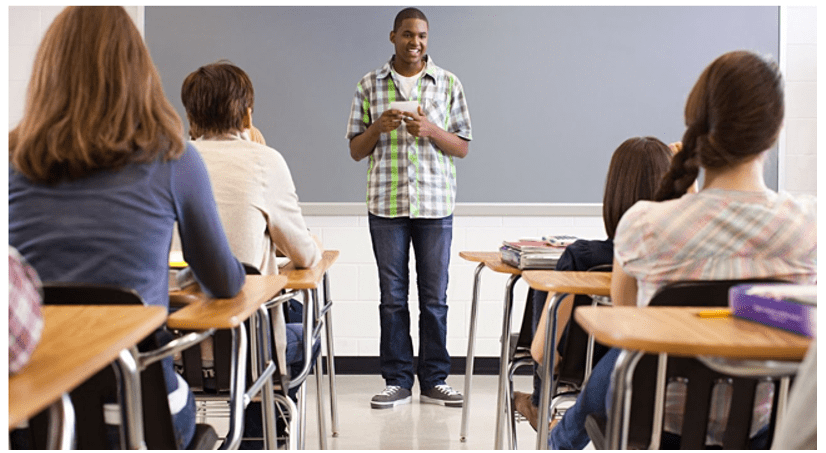
Many instructors turned this live, in-person speech into a video assignment. Students recorded their speeches using their cell phones or a webcam, and they uploaded the video to the LMS as an individual video assignment or as a discussion. Classmates were able to view the video and provide comments, and students were also able to view their own videos and reflect on their performance.

A Speech instructors I spoke with used an online platform called Power of Public Speaking. Students login to the POPS website, and record their speech within the online platform; there are are no files to upload. With practice recordings, the website provides automatic feedback through the power of its artificial intelligence. Examples of this feedback include comments on the volume level, lighting, the student’s position in the video, and even the camera angle. Afterwards, students are able to make adjustments to their presentations, and they are able to record revised and improved videos. Classmates view these videos as well, and they provide feedback. Finally, the student writes a self-evaluation that incorporates feedback from both the website’s AI and their classmates.
POPS and LMS video assignments allowed students to replicate the classroom environment and to learn from peer feedback.
Service-Learning
Some classes also include a service-learning project, where students research a need in the community, design a volunteer project, perform the volunteer service, and then write a reflection essay on their experience. During the pandemic, students did the research about a local problem, and they wrote a volunteer plan, but they couldn’t go to the community center to actually perform the volunteer activity. As a result, the nature of the service-learning project changed from an experiential, community-based activity to something like an applied research study.
The quality of the reflection essay also changed. Instead of reflecting on the volunteer experience – which would have included emotional and sensory observations – students reflected only on the research process. As a result, this service-learning assignment, which is supposed to encourage students to learn through service and volunteering, ended up being mostly another written assignment.
Conclusion
Many programs found ways to shift their teaching and assessment practices to a virtual or online environment. When they did so, many programs were able to keep their existing learning goals, activities, and assignments. They did so with online tools such as Zoom, Microsoft Teams, the Respondus LockDown Browser, JOMI, and POPS. Instructors also learned to use new online tools such as online grading rubrics, video discussions, the Turnitin Feedback Studio, and LMS reporting tools about student engagement.
But there were also many challenges to moving online because some academic programs had specifically designed aspects of the curriculum to be an in-person, highly-experiential, and impactful learning activity. In moving online, programs were not only having to redevelop materials for an online format, they also had to re-imagine an alternative online version of experiential components that had formed the core of their academic programs.
Lirim Neziroski, Ph.D., MBA is a higher education administrator, education consultant, and previous faculty member with expertise in higher ed leadership, instructional technology, curriculum development, academic assessment, program leadership, and strategic planning. Contact Lirim for speaking, consulting, and writing opportunities.
 Lirim Neziroski
Leave a comment