I am writing a series of blog posts about the effects of Covid-19 on higher education. In this post, I explore the effects of Covid-19 on academic scholarship. In the early days of the pandemic, academic conferences were cancelled or delayed, and many scholars lost their presentation venues. Many libraries and research laboratories also closed. Eventually, though, conferences started to reopen in online and virtual formats, and this may have made it easier than before to present at conferences.
Conferences (and Tenure?) on Hold
In the early days of the Covid pandemic (in Spring and Summer 2020), all major conferences became cancelled or significantly delayed. Here is a list of some cancelled academic conferences. The journal Nature even called 2020 “The Year Without Conferences.”

In my personal experience, a regional conference where I was planning to present in May 2020 was cancelled. Another national conference I was planning to attend in late May 2020 was also cancelled.
When universities shut down, researchers also lost access to their research laboratories, to research libraries, and to other research venues. In my own experience, I didn’t lose access to research labs, but the stay-at-home orders in my state shut down all libraries, so I couldn’t borrow books through inter-library loan.
These delays and cancellations slowed down academic scholarship, both presentations at conferences and also research in laboratories and libraries. In my personal experience, I gave five in-person presentations in 2019 but no in-person presentations in 2020. Many other professors were also in the same situation; they had information to share but no venue to present it. I personally didn’t have a scholarship requirement for my administrative position, but I enjoy attending conferences because I enjoy telling others about my work, networking, and learning from others.
However, many professors who have a scholarship requirement for their position may have been unable to meet this requirement. Professors who were planning to boost their chances for tenure by increasing their conference presentations may have been unable to meet this goal. As a result, if they didn’t have a significant record of scholarship in the past, they may have put their chances for tenure at risk.
Virtual and Online Conferences
Eventually, academic conferences stopped waiting for the opportunity to return to in-person conferences, and they started offering online (pre-recorded) or virtual conferences. I noticed that conferences started again in Fall 2020.
My first conference was at the IUPUI Assessment Institute in Oct. 2020. This conference ran live via virtual webinars through Zoom. Attendees joined an online break-out room on Zoom, and presenters gave a live presentation. Here is the recorded video from my presentation at the Assessment Institute: https://iu.mediaspace.kaltura.com/media/1_xtbl1l06.
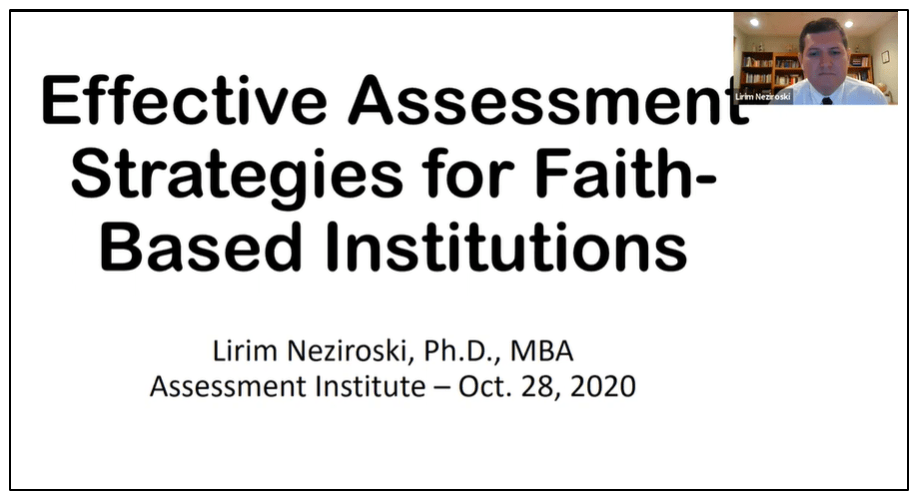
Other conferences were administered via recorded video instead. In a couple regional conferences, I recorded a narrated PowerPoint, and I emailed the link for the video. The video was posted on the conference’s website, and attendees could login and view the video at any time during the week of the conference.
Other conferences ran through a combination of recorded videos and live sessions. The presentation was pre-recorded, and the presenter played the video during the scheduled presentation time. After the video ended, the presenter switched to a live format where he or she answered questions about the video.
Easier, More Conferences
Online and virtual conferences are easier and potentially cheaper to attend. Presenters don’t have to travel to another city or country to attend a conference; they can simply join a webinar from their work desk, and they can attend selective sessions or watch them later.
For presenters, this means no driving or flying, no hotels, no taxis, and no walking from one hotel to another. It also means less missed work. At previous (in-person) conferences, I was out of the office for two or three days, plus I usually used the weekend for travel. In contrast, I logged in to the online venue only during the sessions I wanted to see. I was able to both view the virtual or online sessions (sometimes at twice the normal speed), and I was able to complete my work as well.
The lack of travel also means fewer expenses – no flights, no hotel, no meals, no travel reimbursement, no rental car. Some conferences (such as the IUPUI Assessment Institute) even eliminated the registration fee, so the conference was totally free. For others, the registration fee was only the cost of attendance. This made regional conferences – which usually have a registration fee of less than $100 – very affordable.
Presenters were able to attend conferences without missing a lot of time from work (only a few hours instead of a whole week), and they were able to attend at very little cost.
Presenters could also attend several conferences almost simultaneously. In my situation, I had two conference presentation in February 2021 within the same week. They were both administered online through pre-recorded videos I submitted weeks before. As a result, I “presented” at one conference on Tuesday and at another conference on Friday, even though the conference venues were several hundred miles apart.
The low expense of the regional conferences also made my attendance affordable. I attended both conferences for only $20 – one of them was free for presenters.
Different Atmosphere
The online or virtual format certainly made conferences much easier and cheaper to attend. The IUPUI Assessment Institute, for example, had over 10 thousand registrations in 2020, in comparison to about one to two thousand attendees in the past.
However, the conference environment was not the same. In my experience, the best part about going to an in-person conference is the chance to “un-plug” from the day-to-day demands of work and to spend a whole week on professional development on a given topic. Attendees learn a lot over three or more days as they attend back-to-back sessions from 8am to 5pm, especially if they follow a conference “track” devoted to one specific topic.
This experience cannot be replicated in the online and virtual conference. It’s too tempting to skip sessions in order to respond to the day-to-day demands of work. As a result, this in-and-out conference participation weakens the impact of the conference. Attendees don’t get to learn as much because they are not fully in the learning mindset.
Networking is also much more difficult. A few virtual conferences had networking sessions, but it’s difficult to hold private, individual conversations in a virtual webinar. It’s also simply difficult to start a conversation. At in-person conferences, you may be one of two or three people who attend a session early, so you start to talk. Or, you talk to your neighbor. Or, you talk a person you walk in with at the same time. Or, you talk to a person you have seen at several other sessions.
In a virtual session, this is all missing. In many virtual sessions, you can’t even see or communicate with other attendees. You can see only the presenter, and you can speak only by typing a question in the Chat box. In this situation, there is no opportunity to meet others and network. And, in pre-recorded online conferences, there isn’t even an opportunity to ask a question; you can only watch a video and email the presenter through a regular email.
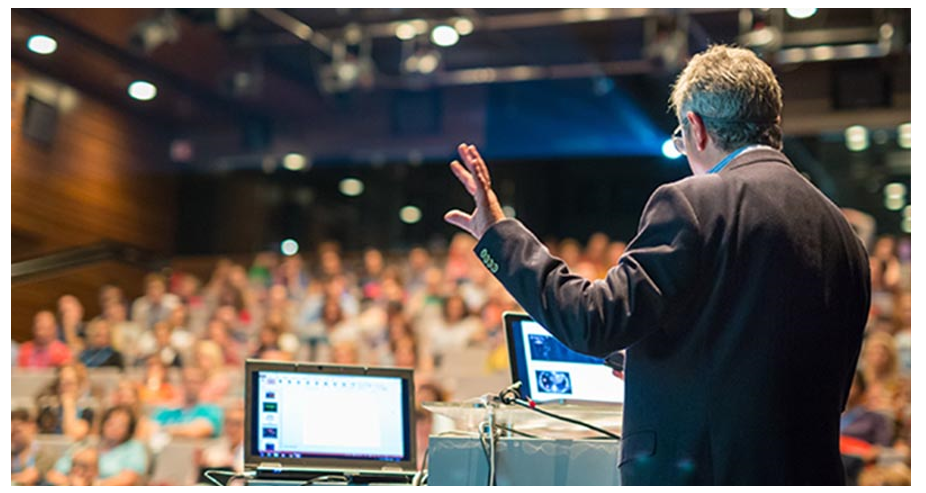
Other experiential components of in-person conferences are also missing. Many conferences have stimulating keynote presentations, with large presentation venues, music, and mood lighting. Some keynote speakers are also very engaging, and they make you do activities. Much of this is lost over the virtual platform.
Many national conferences also spoil you with lunch and snacks. At a technology conference I attended a few years ago in Denver, the organization provided a full sit-down breakfast and lunch, plus various snacks (fruit, ice cream, desserts, coffee) from local caterers. You don’t go to a conference only for the food, but when it’s good, it creates a memorable experience.

Another experiential component is the local travel. Many national conferences have excursions to local museums and well-known landmarks; these are half-day or evening trips you can take with other attendees as a group. At dinner, attendees are often on their own, and they explore local restaurants and the city’s night life. Again, you go for the conference and not for the nightlife, but, when the venue is Denver or Austin or Chicago or Fort Lauderdale (all places I have gone to for conferences), you feel really grateful for the experience. This cannot be replicated in an online conference you attend from your office or from your home.
Feedback
What are amazing conferences you have attended? What made them amazing?
What has been your experience with virtual and online conferences during the pandemic? How did it compare to in-person conferences? Do you feel that you accomplished your scholarship goals? Did you learn or network as much as you could have?
Post a comment below, or send me an email using the Contact page.
Lirim Neziroski, Ph.D., MBA is a higher education administrator, education consultant, and previous faculty member with expertise in higher ed leadership, instructional technology, curriculum development, academic assessment, program leadership, and strategic planning. Contact Lirim for speaking, consulting, and writing opportunities.
 Lirim Neziroski
Leave a comment