I am writing a series of blog posts about the effects of Covid-19 on higher education. In my previous blog post, I defined a number of terms related to online learning. In this post, I would like to expand on a new type of class called “Hybrid-Flexible,” “Hybrid-Flex,” or “Hy-Flex.”
Course Characteristic
A Hybrid-Flexible course is a class that runs in multiple formats simultaneously…
- A traditional in-person class that meets in a classroom.
- A fully online class with instructional content and assignments in an online platform.
- A synchronous online class with live streaming video of the class lecture through Zoom or Google Meet or Office Teams.
- A hybrid class where students can switch between online and in-person formats.
Hybrid-Flexible classes require instructors to conduct multiple versions of the course simultaneously or concurrently. Instructors have to create traditional lesson plans for in-class lectures and activities and instructional content and assignments for the online platform.
The Hybrid-Flexible class is becoming very popular in the post Covid-19 era. It provides students with the greatest number of options and flexibility. They can participate in a different format on a different day (in-person, online, or a mix) depending on what their learning needs and health abilities.
Hybrid-Flexible courses are also appealing to academic institutions because they can demonstrate that they are meeting student needs by providing “flexible” options. This class format may also end up cutting instructional costs. Instead of offering one in-person class and one online class, the college can offer one Hy-Flex class where students decide if they want to participate in-person or online. As a result, the Hy-Flex course could replace both the in-person and the online course.
Examples
Here are few examples of how a Hybrid-Flexible course can work.
A student who enjoys class discussions and group work but not lectures may choose to…
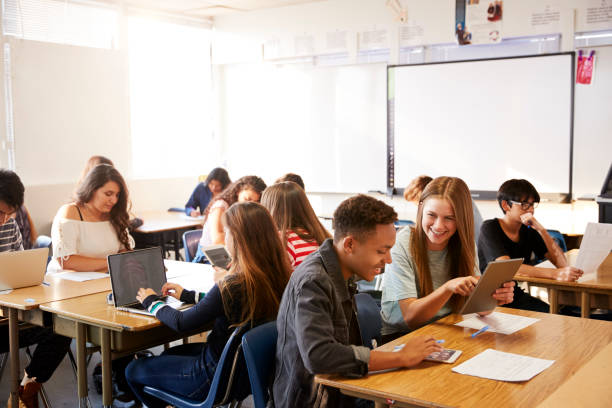
- Read the instructional content in the online course on Monday instead of going to class to listen to the instructor’s lecture
- Attend the in-person class on Wednesday to participate in the discussion and group work.
- Join a live video conference on Friday via Zoom or Google Meet or Office Teams to listen to listen to the exam review period and ask one or two questions via Zoom.
- Take the online exam through the LMS on Monday.
As you can see, this student is participating in different formats on different days, depending on what the student enjoys. The student chooses to attend in person on Wednesday to interact with other students and to participate “live” but at a distance during Friday’s review. But the student “skips” the lecture altogether on Monday, and the student reads the textbook and online instructional content instead.

Another student participates in the class almost exclusively online. This student treats the course as a traditional online course with an ebook for the textbook, online assignment submissions, and online exams. However, the student attends an occasional important day in person, such as a group presentation or the end-of-semester class party. The student also joins the class virtually via Zoom during exam reviews to make sure he or she understands everything that will be on the exam.
Another student who lives on campus and is taking the class with a group of friends prefers to go to class in person so he or she can be with friends in class. The student is also interested in majoring in this subject, so the student attends class in person to develop a strong mentoring relationship with the professor; this may payoff in the future with a possible letter of recommendation or research opportunity.
Benefits
The greatest benefit of Hybrid-Flex courses is the flexibility it provides to students. As the examples show, students can emphasize aspects of the course that appeal to them, such as the freedom and independence to work from home or the collaborative and social aspect of class discussions and group work.

The class also gives students flexibility in terms of attendance. If a student has quarantine or take care of family members, the student can still participate in a “live” format through video conferencing. Or, the student can switch to totally online if the class if the student is too sick or unavailable during class time.
The Hybrid-Flex also allows colleges and academic programs to demonstrate that they are appealing to students with different needs. This single multi-platform course can meet the needs of in-person students, hybrid students, and online students.
This single class may also allow colleges to cut costs and increase enrollment per section. For example, instead of running one low-enrolled in-person class and one low-enrolled online class, the college can run one full Hybrid-Flex course and meet the needs of both students at once.
The college may even be able to increase the class size if the course was previously limited on enrollment size because of the size of the classroom. As an administrator, I have had to run some courses with fewer students simply because the classroom that was available had room for only 12 or 18 students instead of 25. Hybrid-Flex courses also the enrollment to go up to 25 because some students will be in-person while others are online. (If they all choose to attend in person, the room could be changed.)
Challenges
There are many challenges with Hybrid-Flexible courses for instructors, students, and colleges.
Instructor Workload. The instructor’s workload will probably increase in a Hybrid-Flex course. The instructor has to create lecture material and activities both in-person and online, so this increases the time for course preparation. I suppose an instructor who has a developed online course could print the online instructional content and read it during class (so as not to spend time on a second course prep), but that doesn’t sound like an effective teaching method. The instructor will also need to setup video conferencing for each class session, keep in focus of the camera during lectures and demonstrations, record the class session, and share the recorded video. This adds extra work between class periods.
Student Tracking. It’s easy to know who is attending class or logging in online, but it will get confusing when students switch between the two versions. If the student is not in class, it does not mean the student is absent, because the student may have logged in online. But, if the course is also online, is attendance even important anymore?

Building Class Community. In a truly Hybrid-Flexible course, where different students are participating in the class in different ways, it will be difficult to create a shared sense of a class community. Traditionally, students develop a relationship in the class because of shared experiences (such as group work) and because of the information they disclose to each other during class discussion and other conversation. But this does not happen right away. It often takes half a semester for students to become comfortable with each other before they can trust each other enough to share information. This student relationship may never get to happen if the are not sharing the same classroom experience on a regular basis. Similarly, in the online class, students often engaging in online discussion with the same group of students. This may also not get to happen if students are switching between the in-person and online format. It will be difficult for instructor and students to break down so many in-person and online barriers to relationship building.
Course Quality. Instructors who have to prepare for an in-person class, live online class, and traditional online class may not have the ability to do all three very well. For example, an instructor who is a great lecturer may have a hard time engaging students in the live video conference. Or, an instructor who is primarily teaching the course in-person but posting content online for students who don’t want to attend could be compromising online course quality. In comparison to a traditional online course, which may be developed according to Quality Matters standards, the online portion of the Hybrid-Flex course may not have that adherence to online course quality.
Resources. Some courses (such as science labs and healthcare clinical courses) are inherently difficult to teach outside of the classroom. If these courses run as Hybrid-Flexible, the college will need to provide lab space and equipment during the regular in-person class time, drop-in lab time for hybrid students, and materials for online students learning at home. Also, the college may need to provide support for both in-person instruction and online. This means more training, more support personnel, and more equipment.
Additional Resources
Here are a couple online resources for more information:
- OER Book about Hybrid-Flexible course: https://edtechbooks.org/hyflex.
- Public online course from Waubonsee College that provides information about Flex courses: https://waubonsee.instructure.com/courses/9691.
Are you planning to “mix up” your in-person or online class to offer a “flexible” learning environment? Post a comment or send me an email to describe how you will be providing more flexibility in response to Covid-19.
Lirim Neziroski, Ph.D., MBA is a higher education administrator and previous faculty member with expertise in instructional technology, curriculum development, academic assessment, program leadership, and strategic planning. Contact Lirim for speaking, consulting, and writing opportunities.
 Lirim Neziroski
Leave a comment