One of my goals for 2020 was to read more. I read about two hours each night, and I read 45 books altogether. I read mostly popular non-fiction about personal productivity, business management, and education. I also read a few novels I had on my bookshelf for a long time. In this blog post, I summarize the fiction I read. I’ll be summarizing books in the other categories as well.
I greatly enjoyed a couple books I read, but I couldn’t appreciate the literary style, the plot, or the characters of most fiction books I read, even though I read them all cover to cover. I think the writers were trying too hard to do something unique and experimental, but this took away from the clarity of their story-telling and character development. I think I just wasn’t in the mood for experimental, unique novels this year, and I wanted only a clear, straight-forward story with likeable characters.
David Ball – Empires of Sand
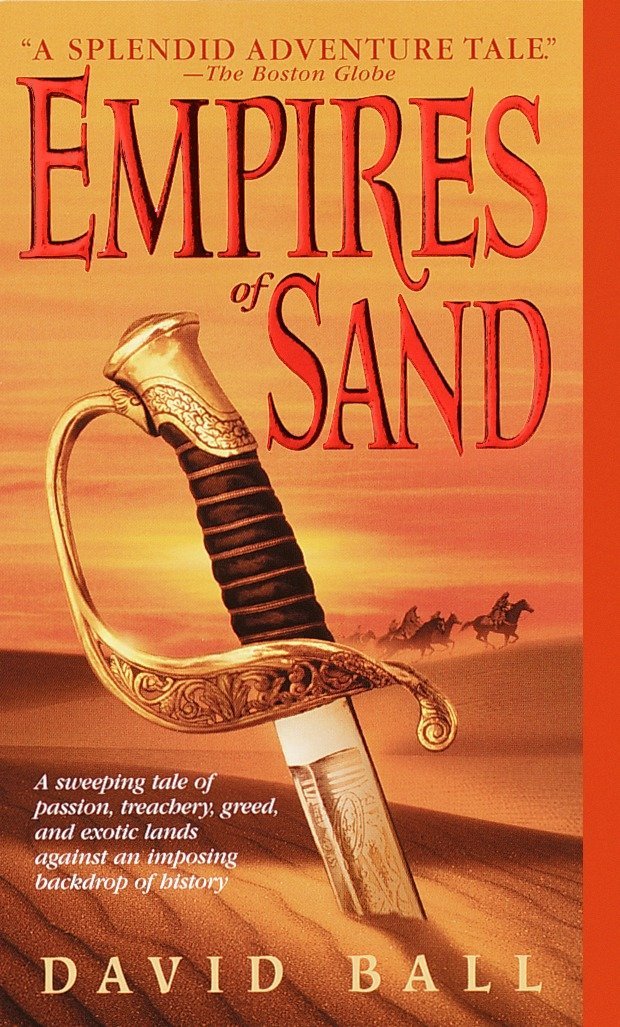
Empires of Sand is an epic story about two generations of the DeVry family, a wealthy aristocratic family in France. Part One is set in mid 1800s Paris during the Franco-Prussian War, Part Two is set in late 1800s in Mali, Northern Africa. The writing style is superb – complex and beautiful. The book has many well-developed characters with complex stories and unique personal motivations. The setting is also very interesting, and the whole novel is driven by action, adventure, and deep character introspection. I started reading this book about five years ago, and it waited on my nightstand until 2020. I looked at it everyday, and I finally decided to reread the whole thing. I enjoyed most of it, but I thought it could have ended sooner.
The first section of the novel focuses on Henri and Jules DeVry. Henri is an adventurous nobleman who marries a princess from a Tuareg tribal society in Mali. Henri’s brother Jules is a soldier in the king’s Imperial Guard, and his wife is a beautiful, ambitious, and flirtatious opportunist. Much of this section weaves the plotlines of ambitious characters who hope to benefit from the war. Unfortunately, Jules gets involved in a skirmish with a malicious band of soldiers, and his reputation and life are destroyed. Portions of the story about Jules’s trial reminded me of Dickens’s Tale of Two Cities. Other major plotlines in this section include the Abbott’s greed, Serena’s struggle to fit into upper-class Parisian society, and the education and adventures of Moussa (Henri’s son) and Paul (Jules’s son).
The second section of the book is set in Mali (Northern Africa), where Moussa and Serena have returned to live with her Tuareg clan. Much of this section is about Moussa’s experience with the Tuareg as an outsider but also as a commander. Another major plotline is the story of Paul as a French army commander for a railroad expedition. The expedition is attacked by the Tuareg, and the novel focuses on Paul’s survival and revenge.
Overall, David Ball’s writing style is amazing because of its complexity – complex sentence structure, vivid settings, gripping action and adventure, and thoroughly developed character stories. My only complaint is that the plot gets a little crazy and tedious at the end, and it takes Ball a long time to wrap up the ending. Nevertheless, this is one of the best books I have ever read, and I will probably read other books by David Ball as well. I also previously wrote about this book on my blog.
Salman Rushdie – Midnight’s Children
Salman Rushdie is a British and Indian writer, who became famous for the 20-year death threat Iran placed on him after he wrote a critical novel about Islam. In Midnight’s Children, Rushdie tells the story of several children who were born at the moment of India’s independence from Britain. These children developed special powers, and the main character (Saleem) became their leader. The novel is famous for its “magic realism” (its mix of the supernatural with the realistic), for the way it weaves national history with personal stories (sort of like Forrest Gump), and for its meta-narrative voice (where the narrator and main character comments on how he is telling the story). The book has won many prestigious awards, including the Booker Prize plus the “best book” among 40 Booker winners. I first read the book in college about 20 years ago, and I thought I would give it another shot this year. Unfortunately, I did not find Saleem to be a very likeable character – I thought he was too self-centered and struggled to connect India’s history to his own life – so I didn’t enjoy the novel very much. I respect the book for the many awards it has won, and the book has been on mind since college, but I probably won’t be rereading it again.
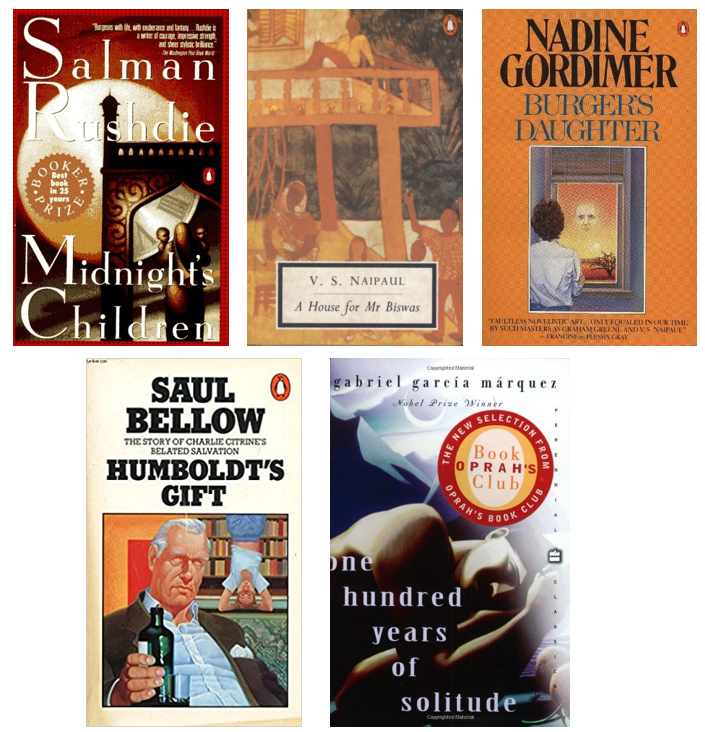
V.S. Naipaul – A House for Mr Biswas
V.S. Naipaul is another multi-award winner, including the Booker Award and the Nobel Prize. A House for Mr Biswas was his first big success. The novel tells the story of Mr Biswas from Trinidad (where Naipaul is also from), who struggles with his career, his family, and his dream to own a home. Mr Biswas marries into a large, wealthy, but domineering family early in the novel, and he struggles to get his independence from them. (His wife, who continually calls him a loser, spends much of her time with her own family.) The novel has a few moments of deep character insight, and the language is sophisticated, but much of it is written in a comic-satiric tone about Biswas’s in-laws, and I think I wasn’t in the mood for satire in 2020. I look forward to reading other novels by Naipaul, but I probably won’t hang on to this book.
Nadine Gordimer – Burger’s Daughter
This is another book I started reading in college, and I unofficially thought of it as my favorite book until I finally read the whole thing this year. Gordimer was a multi-award winner from South Africa who denounced apartheid; she won the Booker Award and the Nobel Prize, and this and other books were banned because of its politics. Burger’s Daughter is about a young girl (Rosa) who struggles to find her way in South Africa and in the world after her parents die in a South African prison. Her parents were leaders in the anti-apartheid movement (her father is very much like Nelson Mandela), and Rosa is constantly suspected of being involved in the movement as well, even though she is not. The beginning of the novel is pretty interesting, as it presents Rosa’s origin story and struggle to come out of her parents’ shadow, but the rest of the novel mostly focuses on her travels and her romances, which I didn’t find very interesting.
Something I enjoyed very much was the book’s narrative voice. Much of the book is written in Rosa’s voice as if she is addressing someone specific. The book is less of a story about Rosa as it is Rosa’s monologue to various people in her life. Overall, though, I think the energy around this book has passed, and I probably won’t read another book by Gordimer.
Saul Bellow – Humboldt’s Gift
Saul Bellow is another multi-award winner, including the Nobel Prize and the Pulitzer Prize. I really didn’t know anything about him before I read this book (which I picked up at a library sale), but I enjoyed reading it. The book is about a young writer who develops a life-long relationship with a famous author and Harvard professor (Humboldt). He also gets involved with the mob, and he is constantly fighting his ex-wife in court and having relationships with other women. The book is funny and light-hearted, the dialog is very realistic, and the characters are pretty fun too. Among the novels I read in 2020, this one was fun, but I don’t think I would read more books by Bellow.
Gabriel Garcia Marquez – One Years of Solitude
This book has one of the most famous first lines in the history of literature: “Many years later, as he faced the firing squad, Colonel Aureliano Buendía was to remember that distant afternoon when his father took him to discover ice.” Marquez (a Colombian writer) is another multi-award winner (including the Nobel Prize), and this novel is probably his most famous book. The novel tells the story of a multi-generational family, and it is written in a comic-satiric tone. The plot includes a lot of sex and violence and incest, and much of the story is about the family, so it comes across as more of a description than a traditional character-driven story. The novel is famous for this because it suggests that there is only a repetition of fateful events and no real progress between generations … but I didn’t enjoy the lack of a central character whose goals drive the story. Nevertheless, the language is beautiful and complex, and the characters are very unique and interesting. I will forever remember the beautiful young girl who is carried away by a gust of wind as she is hanging the bedsheets to dry.
Margaret Atwood – The Blind Assassin

Margaret Atwood is another multi-award winner, and she is probably most famous now for The Handmaid’s Tale, a novel about a future, dystopian society where only select women are allowed to have children and are controlled closely by the state. The Handmaid’s Tale was recently a series on Netflix. The Blind Assassin is another well-known book, and I picked it up when it was first published, but I did not read it until now.
The novel has a complex, three-part storyline. The main story is about an elderly woman named Iris who narrates her biography; she was the daughter and then wife of industrialists who owned button-making factories. Much of her story is about growing up in privilege and then living a cold and controlling marriage. Another major plotline is about Iris’s sister Laura, who is beautiful and reckless and commits suicide. A third plotline is about an unnamed couple who hookup secretly to have a relationship and to write a science fiction novel called The Blind Assassin.
I really enjoyed the science fiction portion of the story-within-a-story, but I had a hard time with this book overall. First, the novel was unnecessarily vague about the unnamed couple; first it seemed to be Laura and then it eventually seemed to be Iris. I think the novel would have worked even if this mystery was clarified. Second, Iris is not an appealing character (she is ironic and crude), and her biography is not that interesting; most of the time she is responding to events and not really driven by her own goals. Also, the most interesting events of the novel (especially about Iris’s husband Richard) are only hinted at in the end; I think the novel would have been more interesting if it actually narrated some of these events that it only kind of mentions.
David Anthony Durham – Pride of Carthage
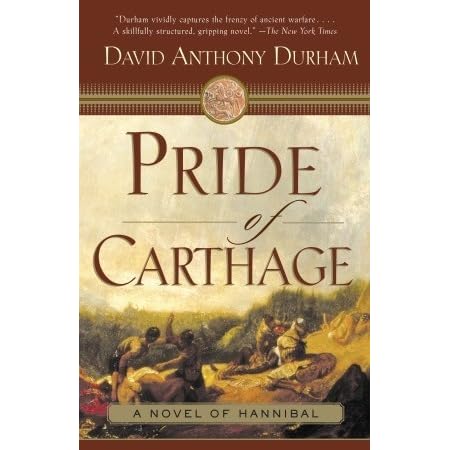
This novel is about Hannibal’s war against Rome, and it was the best book I read in 2020. It is also now one of my favorite books of all time! The novel has many very well-developed and interesting characters who have their own stories. These include Hannibal himself, his brothers, his sisters, his wife, his military commanders, one of his soldiers and a girl he falls in love with, Scipio (the Roman commander who eventually defeats Hannibal), and an African king. The novel does an excellent job of telling each person’s story in turn, and it ties together all of the stories without ignoring any character.
The great appeal of this book is its epic story-telling: Carthage vs. Rome, battles where 70 thousand people are killed in a single day, world domination vs. total annihilation. Each character’s story also presents many diverse emotional perspectives that give the novel a personal connection and an emotional depth. For example, even Hannibal himself longs to be with his wife and son. Meanwhile, one of his brothers struggles to achieve the military success of Hannibal. Another story, about Hannibal’s youngest sister, breaks your heart because of the way international political events intervene in her love life.
This novel shows that writers can still have great success narrating straight-forward, character-driven stories in clear language that avoids unnecessary mystery and social commentary. I love how this book creates great characters and simply narrates their actions and emotions.
Ismail Kadare
Ismail Kadare is the most famous and most successful contemporary Albanian writer alive today. He lives in France, and he has written over 35 short novels, most of them about Albania and the Balkans. Many of his books have been best-sellers throughout Europe, and he has received many prestigious awards, including the Booker Prize; he has also been mentioned as a possible winner for the Nobel Prize. Many of his books criticize the totalitarian government of 20th-century Albania, they include Albanian folklore and history, satire and humor, and a longing for Albania’s past. I had previously read a few of his other books (Doruntina, The Siege, Chronicles in Stone, Broken April, The Three-Arched Bridge), and I decided to end my 2020 reading list with some more Kadare.
Overall, I admire his achievement in writing, but I often have a hard time connecting with his characters and plotlines. They are often mysterious, satirical, descriptive, and analytical rather than character-driven stories about appealing people in interesting situations. Many of his books have an element of the absurd, and they remind me a lot of Franz Kafka. Nevertheless, I plan to read all of them.
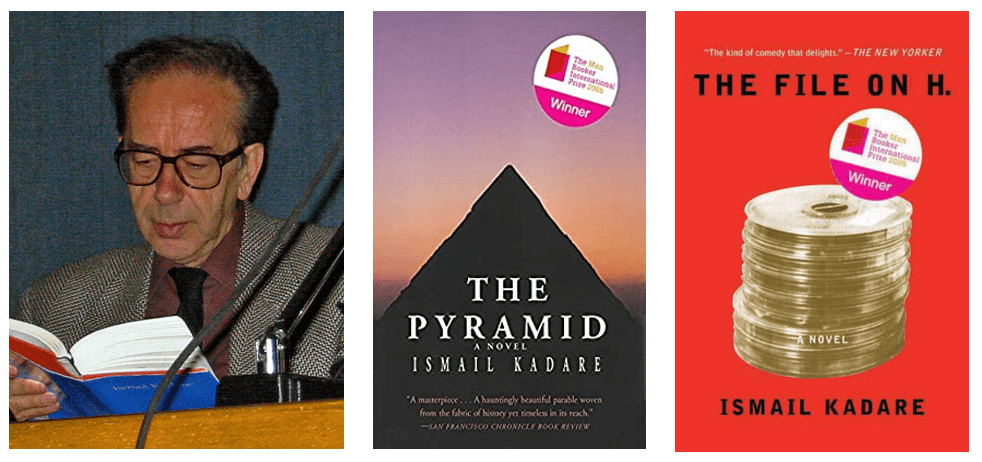
The Pyramid. The Pyramid is about the construction of Cheops’s funeral pyramid in ancient Egypt. The novel doesn’t really have a main character or a plot. Instead, it provides description and commentary about the pyramid itself as it gets bigger and bigger. The interesting story is that construction of the pyramid was meant to keep Egyptians busy and to weaken their spirit for revolution and emancipation. In this way, the pyramid is portrayed as a tomb not only of the Pharaoh Cheops but also of Egypt’s spirit, and the novel has a lot of criticism about how rulers use their authority to maintain power.
The File on H. This novel is one of Kadare’s most famous. It’s about two Irish students who go to Albania to study Albania’s traditional of oral epic poetry. The story is on based on the real research study of Harvard professors, Milman Parry and Albert Lord. The novel helped elevate the image of Albanian folk singers as modern Homeric, Greek epic story-tellers, and this image has helped sustain the idea that Albania has roots that go back to the ancient Illyrians. The novel is interesting for its comic and satiric characters: married women who are sexually attracted to researchers, and government officials who are convinced the two scholars are actually foreign spies.
Reflection
I’m glad I read all of these novels even though I didn’t enjoy all of them. I first started reading many of them in college, and they have been sitting on my bookshelf for 20 years. It was important for me emotionally to finally read them and be done with them.
I read about 45 books in 2020 in the areas of education, business management, personal productivity, and these fictional novels. Summaries of books in these areas will be coming soon too.
What novels have you been reading? Post a comment below or use the Contact Form linked above.
Lirim Neziroski, Ph.D., MBA is an academic administrator and faculty member with expertise in instructional technology, curriculum development, assessment, and higher education leadership. Contact Lirim for speaking, consulting, and writing opportunities.
 Lirim Neziroski
Leave a comment